
Arvon's Saturday Writing Club
On writing without overthinking

In 2025 I discovered Arvon’s Saturday Writing Club, and it changed how I approach writing. It made me more aware of how easily I over-edit when typing, and it gave me a sense of freedom I didn’t realise I was missing.
Since joining, I’ve attended every month, carving out an hour of my Saturdays. Sometimes I’m in the comfort of my own home alone, or with friends who have stayed over, or at my sister’s house. Or even up a mountain in Wales. The location changes but the habit has stayed intact.
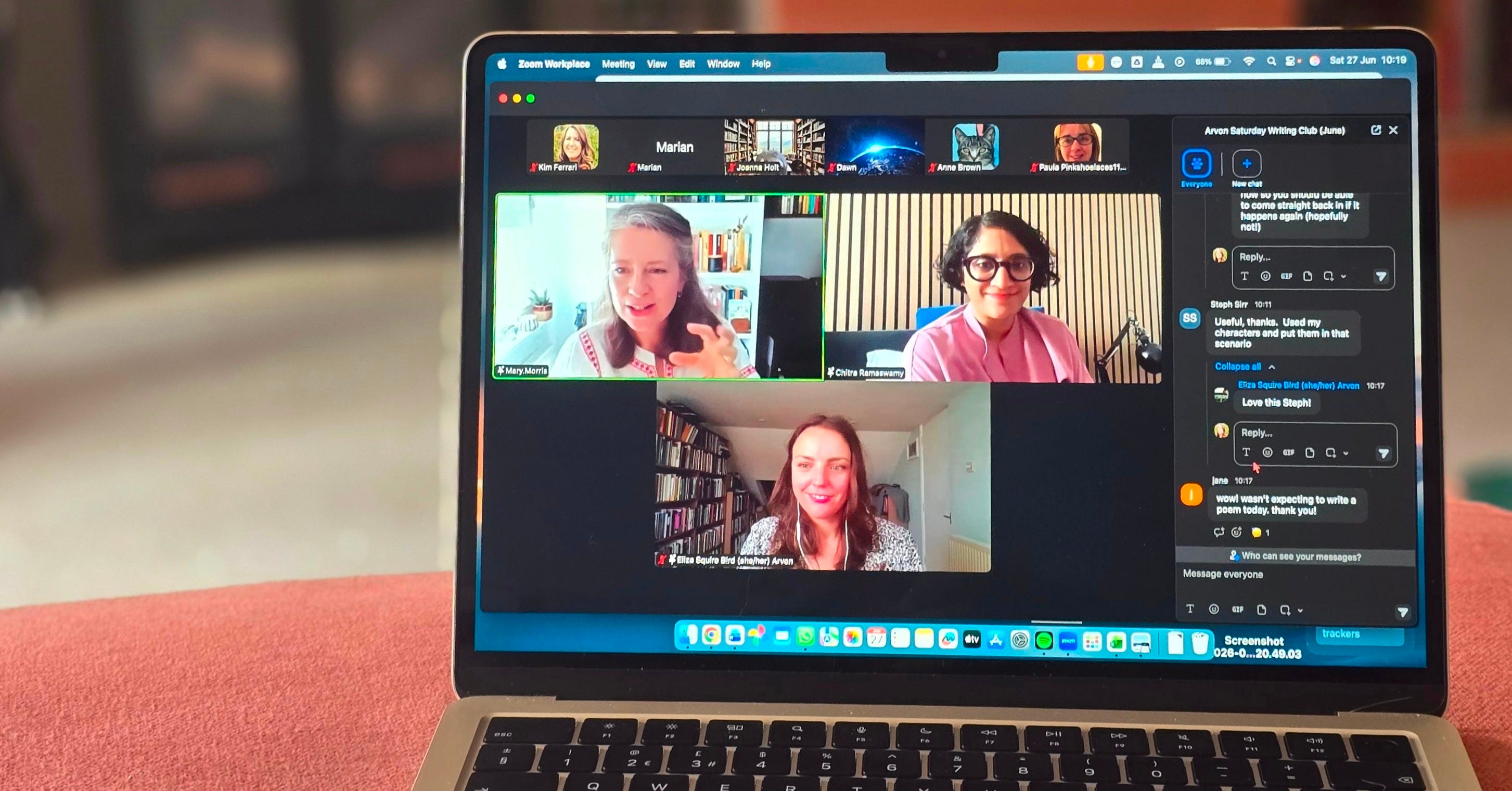
The format is simple. Two writing prompts, an interview with a guest author (who often brings great book recommendations), and optional breakout rooms to talk with other writers. There’s no requirement to share work, which removes a layer of self-consciousness, and makes the space feel welcoming, low-pressure and experimental rather than performative.
I tend to use the prompts in two ways: either to develop material for my novel, or to push myself into writing something outside my usual patterns. Over time, I’ve realised the value isn’t in producing finished work in the moment, but in training myself to keep writing without stopping to judge every line. It feels like a safe space to practice playing around with different themes and styles.
“I write entirely to find out what I’m thinking, what I’m looking at, what I see and what it means. What I want and what I fear.”
- Joan Didion, Why I Write, 1976
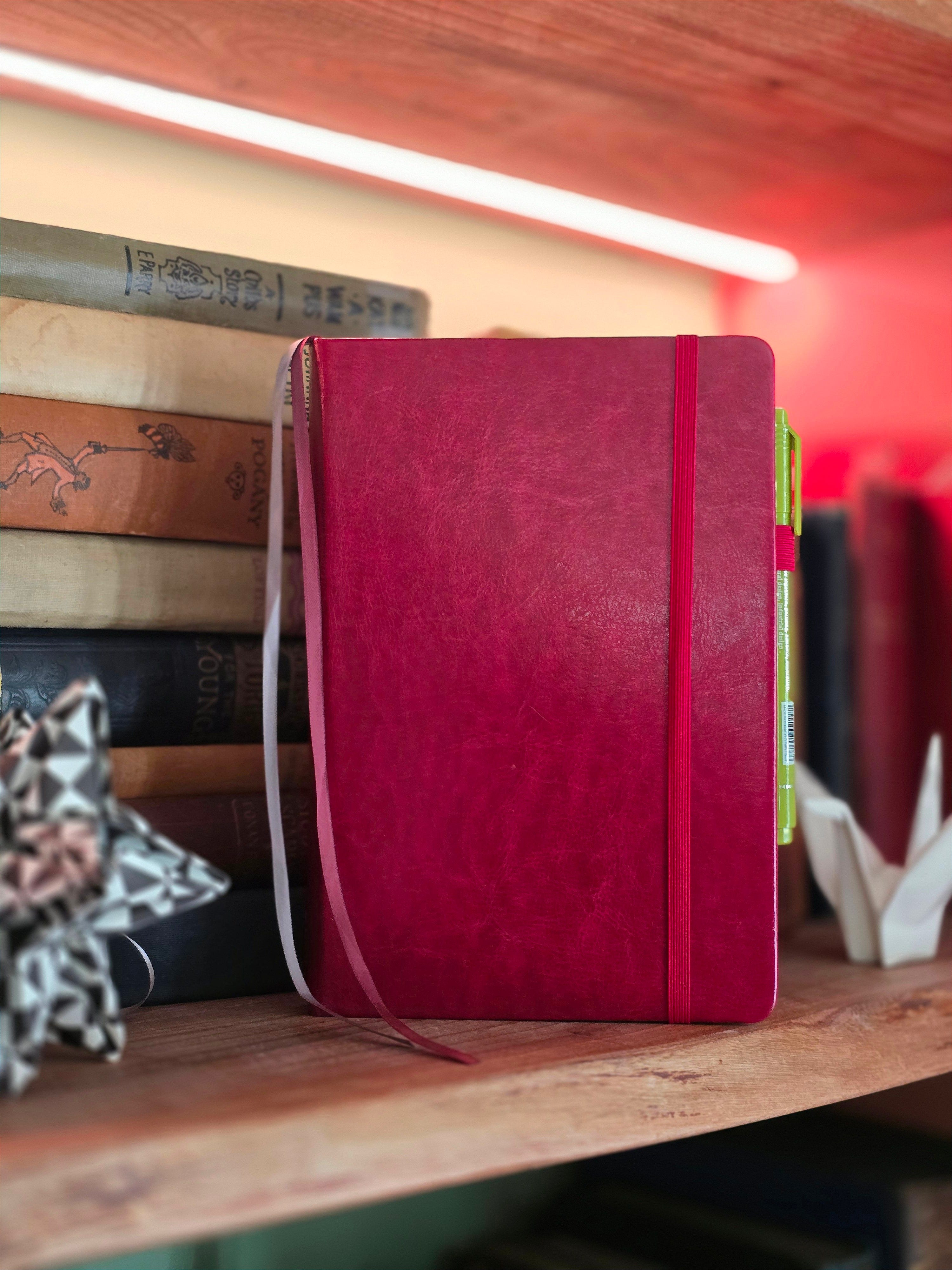
I keep a red notebook for these sessions, and other similar writing workshops. I return to it often as I love flicking through older fragments of writing. Some pages are messy, I must say, and not worth revisiting. Others spark something in me, containing something that feels like it might lead somewhere: an idea for a short story, a memory of what I was thinking on that day, or just a reminder that, yes, I can write.
Some of the prompts have challenged me in unexpected ways. In December, the guest writer was Rachel Long. The exercise was to write continuously whilst she read out random words, which we had to incorporate into our writing without pausing to plan.
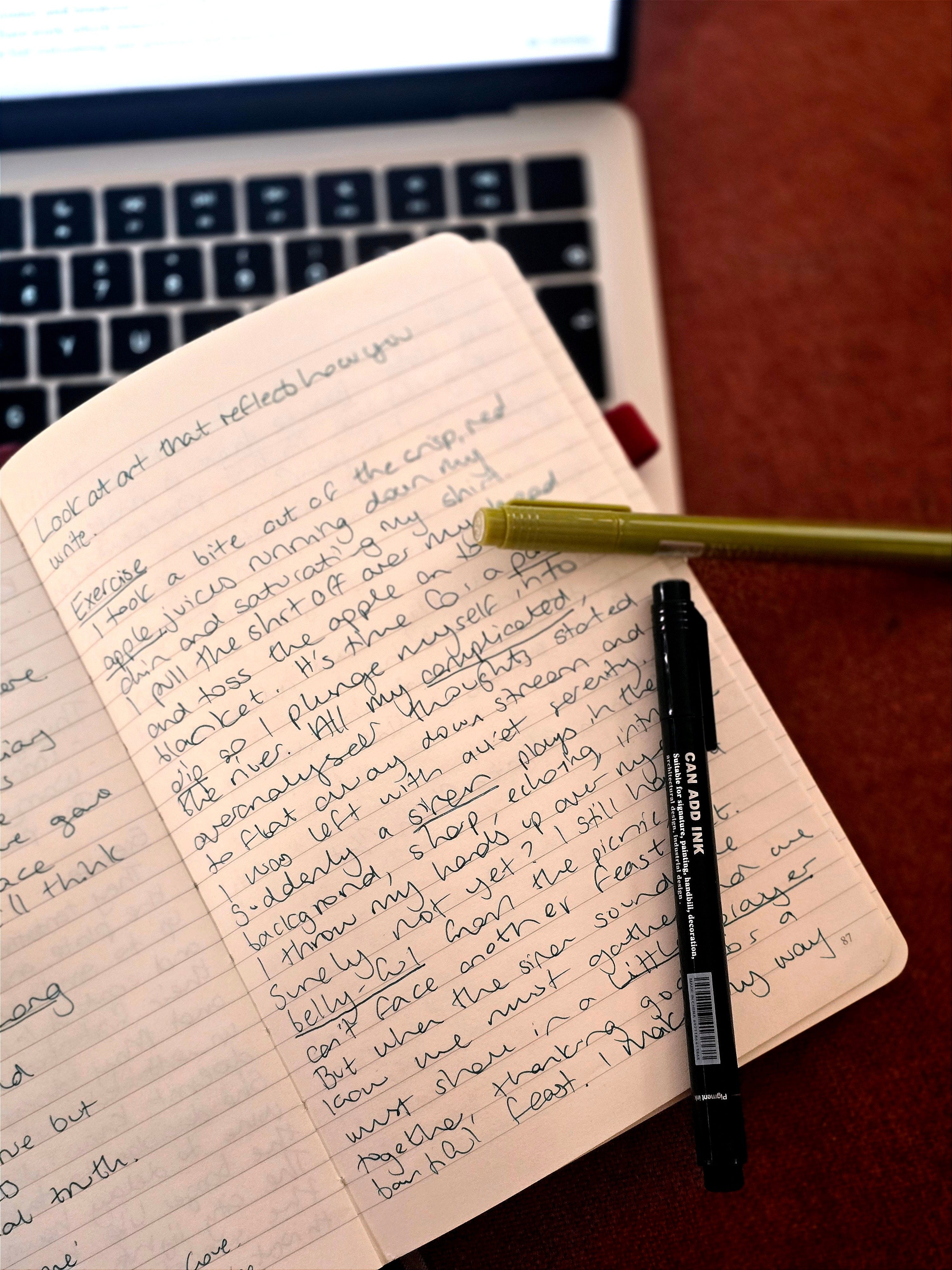
I’m going to share what I wrote. The starting word was apple, the other words in red were the prompt words that were introduced as we were writing.
I took a bite out of the crisp, red apple; juices running down my chin and saturating my shirt. I pull the shirt off over my head and toss the apple on to the blanket. It’s time for a pond dip, I decide, so I plunge myself into the river.
All my complicated, overanalysed thoughts start to float away downstream and I am left with quiet serenity. Suddenly, a siren plays in the background: sharp, echoing, intrusive. I throw my hands up over my ears. Surely, not yet? I still have a belly-full of the picnic, I can’t face another feast yet. But when the sirens sound, we know we must gather and we must share in a little prayer together, thanking god for a bountiful feast.
I make my way to the hall, large and looming, and sit next to my sister. Beside her is Mother, looking clinical in her presentation as if about to perform an operation on the feast in front of us. We have a small margin of time to eat what we can before it all gets burnt to ash.
Now, by no means is this a work of art – quite far from it, in fact. It isn’t polished or controlled. But it is somewhat cohesive, and there is the hint of an interesting premise there: a sense of a slightly unnerving society where eating is regulated by time, where food only exists safely within a narrow window before it turns to ash. Isn’t it amazing how quickly the mind can connect ideas that seem completely unrelated?
What matters more is how it was produced. It had to keep moving. There was no time to think further than the next word, no time to step back and judge it, no time to edit and re-edit and then delete it all anyway... (we’ve all been there, right?).
That is what I’ve started trying to bring into my own writing. On paper, under time pressure, I don’t stall in the same way. On a laptop, I tend to slow down almost immediately, editing as I go until I lose momentum entirely. But what I realise is that I don’t write differently because I’m on paper. I write differently when I can’t stop to judge what I’m writing.
I have also attended an Arvon course led by Kit de Waal, where one of the clearest lessons was simple: get the words down. Don’t edit while drafting. Don’t interrupt the flow with judgement. I’ve learnt now that this approach makes it easier for me to follow where the writing wants to go, rather than forcing it into shape too early.
Now this is likely to cause all you plotters out there to have heart palpitations, but in practice it just means separating drafting from editing. First comes the raw material. Only later do you decide what survives. Why not try this for a future first draft?
I’m still learning to do that consistently. But the point of the Saturday Writing Club, and of these exercises, is not to produce perfect writing. It’s to produce writing at all, and to trust that a gem might be buried amongst all that dirt.
And what an exciting thought that is.
Hi I am Kate, also a friend of Arvon. I can’t speak highly enough of the inspirational workshops, and the Saturday Writing Club, although I have been otherwise committed on the last couple. Saw your post on the Padlet, which lead me here.