
Taking Virginia Woolf to Hay-on-Wye
Notes on reading Orlando, and being elsewhere

You never quite know, when first you lift a book, what impression it may make upon you, what quiet rearrangement of thought may begin from that very first page, what possibilities may gather, swelling almost to overwhelm.
We sat on canary yellow stools as we cracked open the spines of Orlando; sunbeams, insistent and playful, tickled our cheeks as if she had been waiting for us all morning; the River Wye crashed below us, moving with its own restless purpose. Behind us, the smell of roasted coffee beans rose warmly in the air; a skirt lifted and fell in the wind; sunglasses caught the light then lost it again, rising and falling with the passing clouds. Anxiety swelled at the thought of the car, held fast by the earth, flaring, then settling, replaced by the quieter, steadier understanding that, after all, everything would be alright. Latte foam settled on the bridge of my nose, lending itself rather generously to laughter, and then we were lost to it, and so the tone was set for the day.
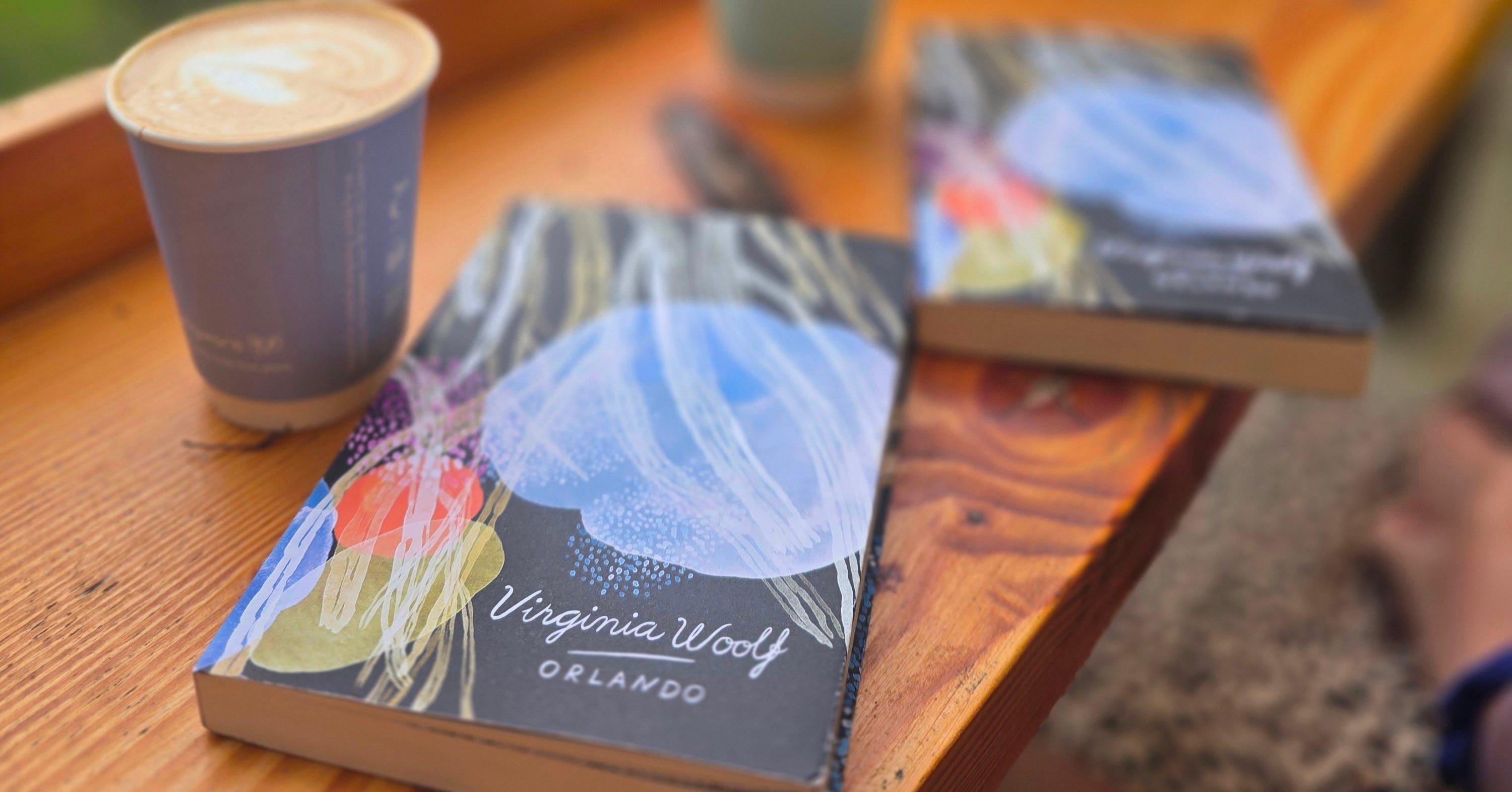
But I must stop here. I feel, already, that I have taken on more of Virginia’s idiosyncrasies than I intended - her way of circling a moment, of letting it expand and settle all at once. They say mimicry is a form of flattery but that is not my aim. Of course, I have Woolf to thank some of my literary revelations of this past year, however I do not wish to thrust upon the reader the complexities of her writing style and the mental acuity required to absorb it. This is not to be an imitation, but an attempt at tracing the shape of a thought as it forms and softens into something like clarity.
A reflection, a realisation, an awakening, perhaps.
This, simply, is a story of two women who allowed themselves a weekend of escapism into a book. I am one of these women. The other is me, but in another body. I cannot remember a time without her, and nor do I wish to. She is an extension of my mind and my experiences - my comfort, my humour, my sister by choice, my best friend. She unknowingly, and selflessly, draws me out of the darkest shadows, casting a light so bright that I cannot help but turn towards it, embrace it, and enjoy it.
She is Harriet.
(We did, indeed, ‘guffaw’, ‘tee-hee and haw-haw’ at there being a Harriet in Orlando, however my Harriet is neither six-foot-two, nor does she have ‘long, lanky cheeks’ or a ‘face a yard long’. She has, though, on occasion been known to resemble ‘a hare startled’ - as Orlando first perceived the Archduchess Harriet - particularly, for example, when faced with entering a male-dominated, cramped pub. I am also sure, though she will undoubtedly protest, that she has, on occasion, led men to be so overcome with passion that they have to excuse themselves from the room, in a manner not entirely dissimilar to Orlando himself upon fancying the Archduchess.)
I digress.
At a time when so many other women like us, in their early thirties, spent their weekends in recovery from the night before, or in anticipation of it, or else in the unrelenting orbit of children’s commitments and errands, we found ourselves, for once, unbound. Free, it might be said.
Free, yes, but it is an interesting term. I am not certain it belongs to me, not fully, though I stand now without the ties I once knew. Sometimes I wonder if freedom is something one has to teach oneself; settle in to.
I had needed to get away, if only for one night. Life had a way of pressing in at all sides at once, with such persistence that you can do little but long for a pause, or a small, unclaimed place, where you can allow your mind to wander, and your heart to hope, and where you can believe again, if only briefly, that still, yes, life can be good.
We set out on a journey of three hours and an itinerary planned with precision – with mandatory tea, perusal or reading time allocated to each stop, sometimes all of the above, if we were lucky. The pull of desire for spontaneity was certainly there; for remember, we were free. However, the idea was swiftly quashed as organised fun is in our nature, and by the very name of it, is still fun.
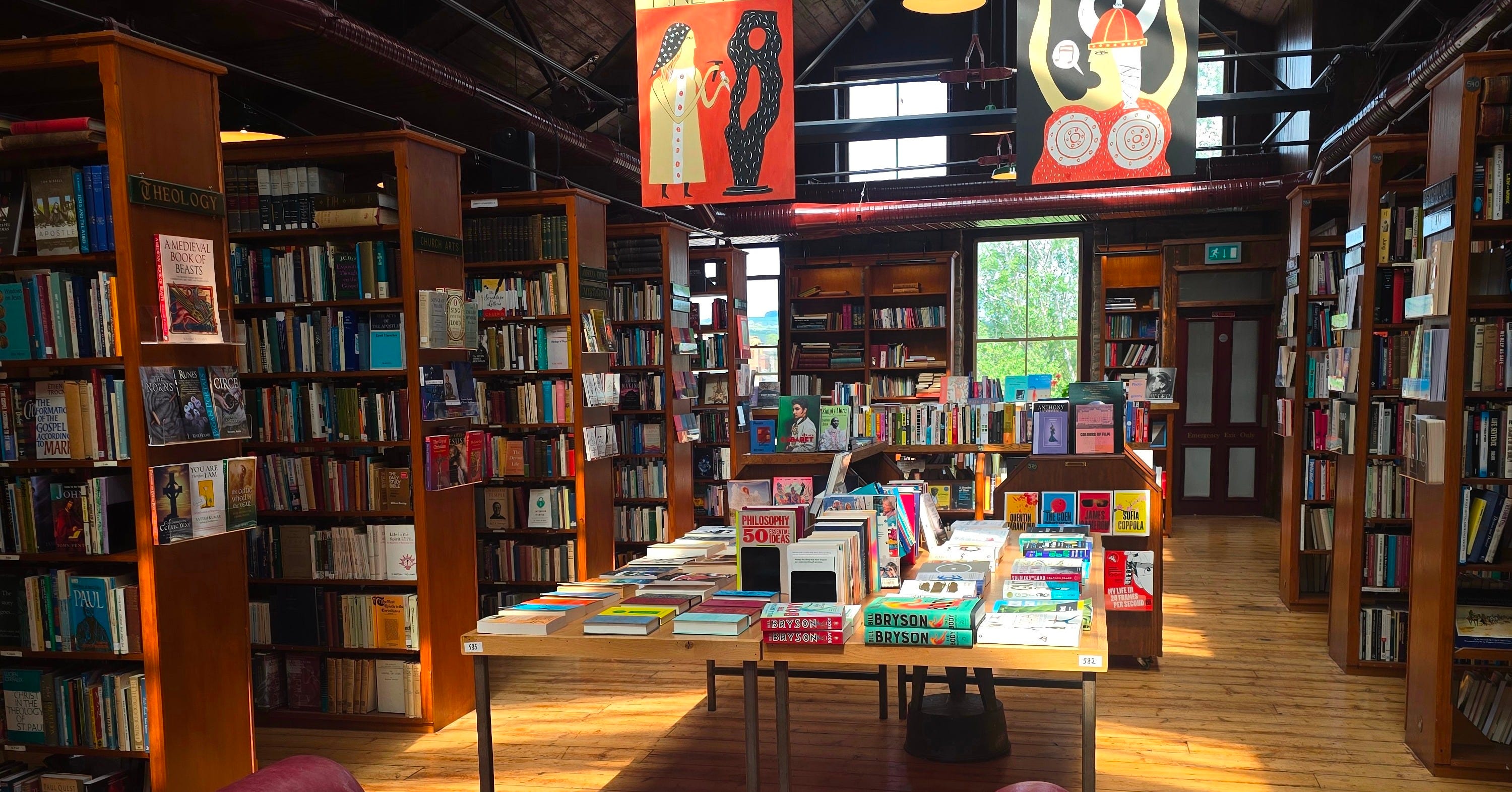
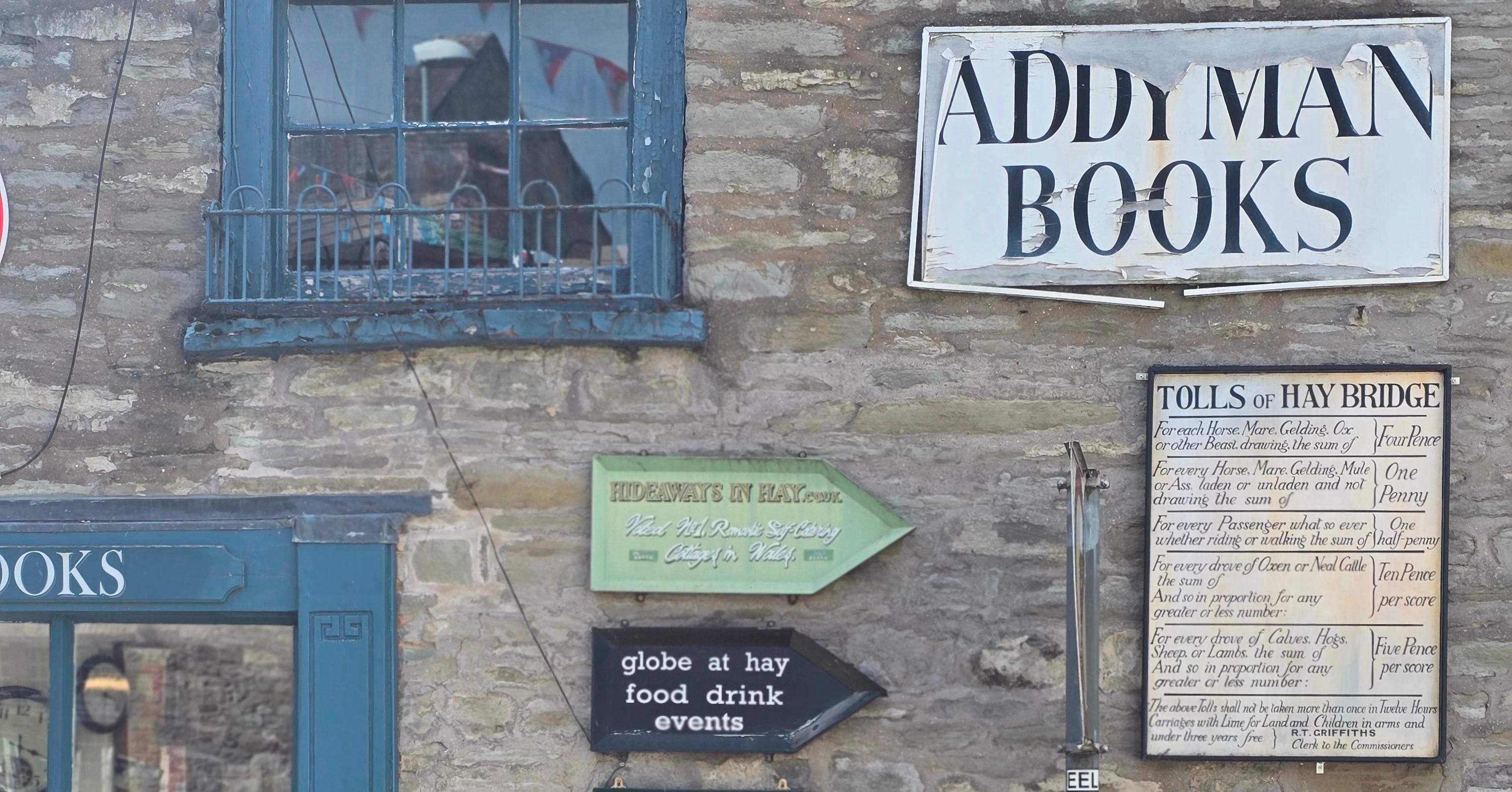
The town, itself, felt like it was born for this purpose; like it had invited us years before and had been patiently waiting; ready to open its arms and welcome us into an embrace; ready to whisper its literary revelations into our ears. Winding cobbled streets; ivy covered cottages; countless bookstores; coffee spots – a recipe for tranquillity.
We moved from place to place, reading, drinking, talking, observing; for there is truly no better pastime than people-watching, and forming imagined lives for those you will never happen upon again. It was noted, for example, that the vast majority had a dog with them. As Orlando observed, both human and dog seem to move through the world in the same way – they walk, they pause, they sniff, they bark at each other. From behind the window of a café, we know not what the humans are saying, and we know not what the dogs are wishing to say, should they be given the capacity to speak.
And, if were to be in the mind of Orlando: what if the dogs could speak? Would they wonder why each and every shop was filled with paper; why the humans insist on picking up multiple stacks of paper to carry around with them; why they are giving paper in exchange for those stacks of paper; why they flick through the paper and sniff it?
Though, ‘speak they cannot’. And so, we packed up our books and our phones; we piled our plates and our mugs; paid our dues and said our thanks; and we moved on to our next destination on our itinerary of organised fun.
We took pause from reading to make superfluous purchases of literary items, channelling Orlando’s impulsivity and desire to learn; perhaps using this as justification for behaviour that might otherwise have been recognised as retail therapy.
Books upon books upon books upon books. If you have visited Hay-on-Wye, you will understand that this is no exaggeration. The bookstores take on their own personality; they don’t overpromise, but sit patiently, waiting for those who need them to find them, and those who find them to realise that they needed them.
Antique books hidden amongst new releases; genres both divided and combined; some piled high, some in regimented order; all of them passed through many hands, softened at the edges by attention. There is a kind of movement in them even when still - pages already half-opened; spines leaning as though in hushed conversation with their neighbours. The quiet insistence of things waiting to be taken up again.
And then the interruption of us. Bags swung too close to stacks, a slight misjudgement of space, and a small collapse of order that is quickly forgiven by the room itself.
I was, as I so frequently am nowadays, struck by the deep melancholic realisation that there is no realistic way that one human can read all the books they would wish to read. Aside from the fact that my bank account would not allow it, time is also an enemy.
As it stands, I have over four hundred novels on my ‘to-be-read’ list, and at times that feels overwhelming; like centuries pressing down on you; like having too many versions of yourself to hold.
At other times, it feels exciting. How wonderful is it that people are pursuing a plethora of creative pursuits, and that I should be so lucky to have my pick of what to read. I have taken to reading three different novels at once: one in print, one in audio and one in electronic form, each occupying a different moment in my day. It feels like I am holding a secret; like I’ve found a cheat code for life; like I’m spending the majority of my time in meaningful pursuits that provide me with a regular dopamine hit that 50mg of sertraline alone cannot fulfil.
And before you ask, as I know the thoughts are likely to have passed through your mind, whether consciously or not: yes, I can follow three story lines at once; no, I do not experience some characters jumping from one book to another; no, I am not rushing the experience of reading; yes, audio counts as having read a book. Isn’t it curious how whatever decision you make, someone somewhere will judge it; for what reason, I cannot fathom, for it has no bearing on their life and experience whatsoever. Let me be! Let me read!
I have strayed somewhat from Orlando but feel it important to paint the full picture of the experience. Truthfully, I did not know what I expected from Orlando. What I certainly did not expect was to find so much of my own reality reflected back at me.
Perhaps that is why I hesitate now.
Once thoughts are committed to the page, they become more difficult to ignore.
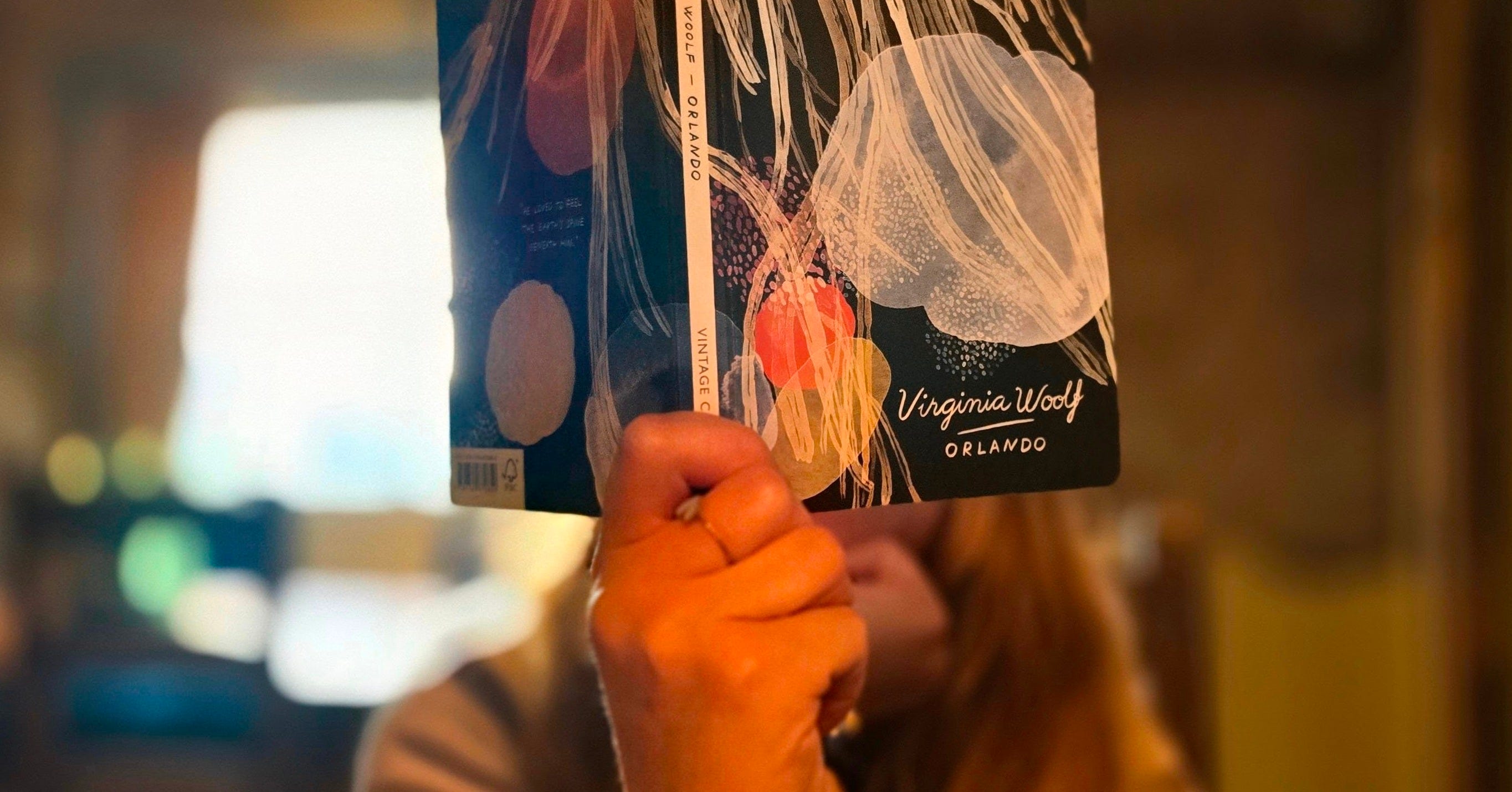
So, what of reading a book such as Orlando with a friend such as Harriet in a place such as Hay-on-Wye? It was a recipe for serenity; the kind of book that thrives upon discussion and yet rewards private reflection. It demands engagement whilst simultaneously encouraging introspection.
We wandered the streets and spent the evening sipping cocktails with sugar-rimmed glasses and frozen fruit balanced precariously on top, and we played scrabble, as if reading an entire novel in a weekend was not mentally taxing enough, and we laughed. Our evening meal took nearly two hours to arrive, but even that could not extinguish the joy of the day.
When midnight arrived, we remained conscious and engrossed in discussion; turned toward each other in our respective beds, blankets pulled up to our chins, warm light of lamps casting shadows across; debating the meaning of the great frost and the subsequent flood; wishing Virgina to be reborn, to settle it for us, once and for all.
One felt it too fantastical, the other revelled in its symbolism. Hark! An extension of my mind, but a differing view! How engaging! How exciting! We exchanged our interpretations, frustrations and admirations. We forgot where we were; lost in the fluid, time-bending reality of Orlando; where time stretches and folds; where the boundaries between imagination and lived experience dissolve without announcement; until the murmurs of the world outside our window and clattering at our door brought us back to existence, and we fell into a deep sleep.
And I wondered - will I fall into a trance similar to Orlando and be reborn anew? Will a dark wing come to brush off the harshness of my most galling memories and ‘gild them with an incandescence’?
No such trance came; however, I did feel as if I awoke changed in some way, having experienced one of my best days of the year, and having fallen asleep with, perhaps, no galling memories present enough to require gilding. A brief, blissful reprieve.
So, we were set for a day anew, having reached the halfway point of the novel and the halfway point of our trip. Let us ponder on this Great Frost some more, for I was, unsurprisingly, the one who revelled in its symbolism, and, in all honesty, feel I have since come to persuade Harriet to my way of thinking; though it is important to appreciate that difference of opinion should be celebrated, and that we ought not seek to persuade another to think solely in our own way.
The Great Frost, where Virginia paints a world where ‘birds froze in the air and fell like stones’, and people ‘struck stark in the act of movement’, is the moment that we meet Sasha and experience Orlando falling into the ‘delights of love’.
Birds frozen mid-air; movement held as if the world had forgotten how to continue. And Sasha arrives in this precise moment. It feels, at times, as though love operates in this way: so total in its arrival that it appears to suspend everything else into stillness.
Have we not all experienced relationships so all-consuming, that it suspends reality itself? And yet, years pass and time is never frozen. Nothing is ever truly still. Time does not pause; it only changes the speed at which we perceive it. What we mistake for permanence is only intensity. And intensity, eventually, gives way. And then, almost imperceptibly, the flood.
“Nothing thicker than a knife's blade separates happiness from melancholy.”
- Virginia Woolf, Orlando
Had time truly frozen, I would have been the same youthful, innocent, optimistic, spritely person I was before the frost. I could melt and be free to live that decade as the young woman I once was. Nothing is frozen. Not really. Even in the Frost Fair, the river is only pretending. Everything is always changing, always moving.
For Orlando, the flood follows Sasha’s betrayal; her sudden disappearance from his narrative; her immediate seeking of another love. Everything that Orlando knew to be solid and true is no more; it melts away and disappears almost as quickly as it started. When this happens, we are forced to take stock and try to identify what is real again, who you are now that you are not the person you were before. A set table and suckling kittens float down the river in front of Orlando – everything is familiar and still exists and yet is out of place. Orlando’s world no longer makes sense, because his reality does not match his expectations.
"By the truth, we are undone”
- Virginia Woolf, Orlando
And with the flood, which inevitably has its day marked for all of us, at some point, life is irrevocably changed. From that chaos, transformation occurs; you cannot go back to the life you knew before, for you are changed by the events. You must learn to evolve.
I am changed, but I am also the same person. I am precisely as I have always been, just as Orlando remains Orlando after awakening as a woman. No single moment is sufficient to undo identity; and yet identity is never fixed either. It is shaped by memory, personality, experience, genetics - none of which belong to anyone but oneself.
Orlando once believed marriage would alter a person in some essential way; that something definitive would occur at the moment of saying I do and of placing that plain gold band upon a finger. And yet nothing, outwardly, appears to change. What, then, is marriage for, if not purely a societal pressure? What does it mean to bind oneself to another if permanence itself cannot be guaranteed?
When the book had reached the end, we were sat opposite each other in our final café. The last page turned with a kind of quiet finality that felt like accomplishment. There is a satisfaction in completion, a sense of having moved through something whole. And yet, almost immediately, something else begins: a lingering attention, as though the world of the book refuses to fully withdraw. Orlando does not end so much as remain present, pressing gently at the edges of my thought, returning in fragments, insisting on being revisited and reconsidered.
I wrote this on what should have been my wedding anniversary. Seven years ago, I made a promise, but I have since learnt that a promise I make can be broken by another; that promises made by people do not always survive in the same shape. Perhaps they were never meant to.
Whilst writing, it had struck the third hour, the time at which we said I do. And I do. I do wish to start anew; to think more clearly about what it means to be me; to move through the world without the weight of borrowed certainty. I do wish to learn and expand my mind, and to read until reading itself becomes a way of being.
This is not a wish for solitude; far from it. I have learnt that I am my best self in the presence of others; they lift me, educate me, soothe me, humour me, support me. They listen. For a long time, I absorbed the beliefs of others; I mistook caution for identity, and avoidance for safety. I assumed my introspective nature and introverted personality meant I was destined to a life of avoidance, but I am learning, slowly and imperfectly, that to live at all is to step outward.
‘I can begin to live again’.
- Virginia Woolf, Orlando
And still, I think, there is more of myself to be read.
I am ‘a woman. Yes, but a million other things as well.’