
The Witch Was Not Always a Woman
What writers can learn from how we imagine witches.

We tend to think we know what a witch is. Almost automatically: women, usually older, usually an outsider, usually dangerous in some vague, socially accepted sense.
That image feels stable. But Iceland’s history disrupts it.
Across most of Europe, around 70–80% of people executed for witchcraft were women. In Iceland, the pattern was reversed: roughly 90% were men. Similar male-heavy patterns also show up in parts of Finland and Estonia.
A small fact, but definitely an interesting one, because it immediately unsettles something that feels very fixed in the imagination: that witches are, almost by default, considered women.
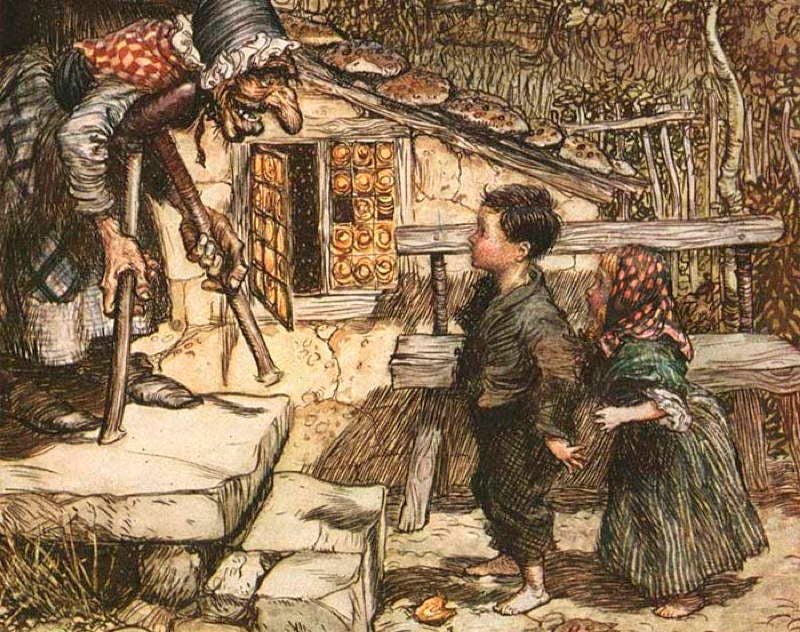
If witches weren’t always women, then where did that certainty come from?
What interests me isn’t just the Icelandic exception. It’s that it never became the dominant story. Somewhere between court records, sermons, and folklore, one version of the witch survived and another didn’t.
Earlier this week, I went to a Seed Talk by Dr Julie Phillips on The History of Witchcraft & Women: Magic, rituals & the patriarchy. I went for practical reasons more than anything else as I’m working through ideas for a future novel that might involve witchcraft, and I wanted to a sense of what remains once you strip away the fantasy versions.
I left thinking less about witches as a subject, and more about how the idea of a witch was built.
Accusations of witchcraft were never just isolated events. They were interpreted through existing beliefs, and those beliefs shaped what the accusations became. “Someone did something” slowly becomes “this is what people like that do.”
That is where the witch stops being just a case and becomes a literary figure.
And by literature, I mean that in the wider sense: trial records, pamphlets, sermons, gossip, retellings, and the eventually fiction. Each layer removed detail. The individual case became less important than the pattern it seemed to confirm.
In most of continental Europe, this was reinforced by theological writing on demonology, like the Malleus Maleficarum. First published in 1487, it went through numerous reprints between the late 15th and 17th centuries and was widely circulated in parts of Europe, giving it significant reach in shaping how witchcraft was discussed and prosecuted.
“All witchcraft comes from carnal lust, which in women is insatiable. Women therefore are evil as a result of nature.”
- An extract from Malleus Maleficarum (1487)
The text reflects a broader framework in which witchcraft was associated with moral and sexual corruption, tied to the body, reproduction, childbirth, and social disorder. These anxieties were disproportionately directed at women. Rather than functioning as scripture, it operated as an authoritative reference within the institutions that defined and prosecuted witchcraft.
So, a stable figure emerges: the witch as woman. Old woman. Outsider. Morally ambiguous. Dangerous knowledge. Slightly out of place.
That figure carries into folklore and then into literature. By the time it reaches Shakespeare, fairy tales, Gothic fiction, and modern fantasy, it already feels established.
Male equivalents exist, but they are named differently: wizard, sorcerer, mage, magician. These terms carry a different weight. They imply training, structure, legitimacy. Even when dangerous, the threat is usually contained at an individual level. A wizard is rarely treated as a category of social contamination in the way a witch is.
Modern fantasy has softened these boundaries, but it hasn’t removed them. Witches still tend to be read as female-coded, while wizards and sorcerers sit closer to formal or institutional power.

What matters here is this: fiction does not inherit reality. It seems to inherit what reality has become through repetition.
That is why modern fantasy can still default to female witches and male wizards, even when historical cases are more mixed than that suggests.
There is also an argument that accusations against men did not scale in the same way. They remained more individualised, tied to specific disputes rather than forming a general statement about what men “are.” And what does not scale in narrative rarely survives as archetype.
That is where Iceland becomes interesting. It shows what happens when numbers do not turn into narrative. The records exist, but they do not become a widely shared archetype.

In Iceland, accusations against men did not reshape what masculinity meant. They remained individual cases. Elsewhere in Europe, accusations against women attached more easily to existing anxieties about gender and disorder, and so they generalised.
Cultural memory tends to keep what fits an existing frame. It discards what does not.
It raises a question I can’t answer: if the pattern across Europe had been reversed (if most accused witches had been men) would “witch” still mean a woman? Or would it have become neutral, or even male?
Would power alone have shaped the category, so that “witch” attached itself to whoever was positioned as the social threat?
I have no answers, which I’m aware is rather annoying but this page is for curiosity not for conclusions.
What this suggests though is that historical pattern becomes literary figure, and that literary figure becomes the version of the past we think we know.
Outside witchcraft, the same process appears in how fiction slips into perceived reality.
Sherlock Holmes is fictional, but treated as if he has a physical footprint. People visit Baker Street, leave tributes, and treat the character as tied to physical space. That effect is reinforced by institutional and commercial signals, including his presence in Baker Street Underground imagery and signage.
Robin Hood and King Arthur sit between myth and history. Whatever their origins, centuries of retelling have turned them into narrative figures first. Real places like Sherwood Forest and Tintagel are mapped onto them afterwards, reinforcing the idea that the story has geography.
Dracula works in a similar way, attaching fiction to Vlad the Impaler and turning Transylvania into a literary afterlife.

Religious texts operate differently, but a similar mechanism is still visible. The Bible is a collection of writings shaped by translation, editing, and transmission over time, yet for many it functions not only as literature but as authoritative truth.
Meaning seems to shift from what is written, to what is repeatedly reinforced. Once that happens, some stories become entertainment, others heritage, and some become doctrine. The boundary between story and reality stops behaving cleanly.
Obviously, I’m not in any way saying that my writing is on the level of the previously mentioned texts, but I do think it’s important for writers to be aware of how repetition shapes what we believe. Every story we tell has some power to create a pattern, and it’s worth thinking about which patterns we’re adding to and which ones we might question.
So this is what I’m taking into my writing.
Don’t let gender do the work of explanation. It’s not a shortcut for motive, personality, or role in a story.
Don’t reduce people to functions. Even minor characters should feel like they exist beyond the scene they’re in.
Pay attention to repetition. When the same pattern keeps appearing, it may be reinforcing beliefs, not just telling stories.
Stories don’t copy reality. They take pieces of it, leave others out, and turn what is left into patterns that are easier to remember.
What stories from your own culture or history have shaped how you see the world? I’d love to hear your examples.
Thank you for sharing this piece, such an interesting topic for discussion. My own writing crosses between ideas of Gods, mythology and how fireside tales can evolve, over time, into doctrine and fact. According to the Oxford English dictionary, in old English 'Wicca' was a man practising magic, and 'Wicce' a woman. So perhaps some precedent lurking way back that has got consumed over time. A fascinating topic to continue discussing. Thank you!
Great discussion piece 🙌🏻 Such an important topic and very close to my heart. Cathryn Kemp’s new novel is going to explore witchcraft in Iceland and I’m really looking forward to how she shapes the stories