
A Midsummer Reading Review
What reading 64 books in six months has taught me

We have just passed midsummer, the halfway point of the year, and as of today I have read 64 books in 2026 so far. I am, quite frankly, astounded. I actually think I might be proud of myself.
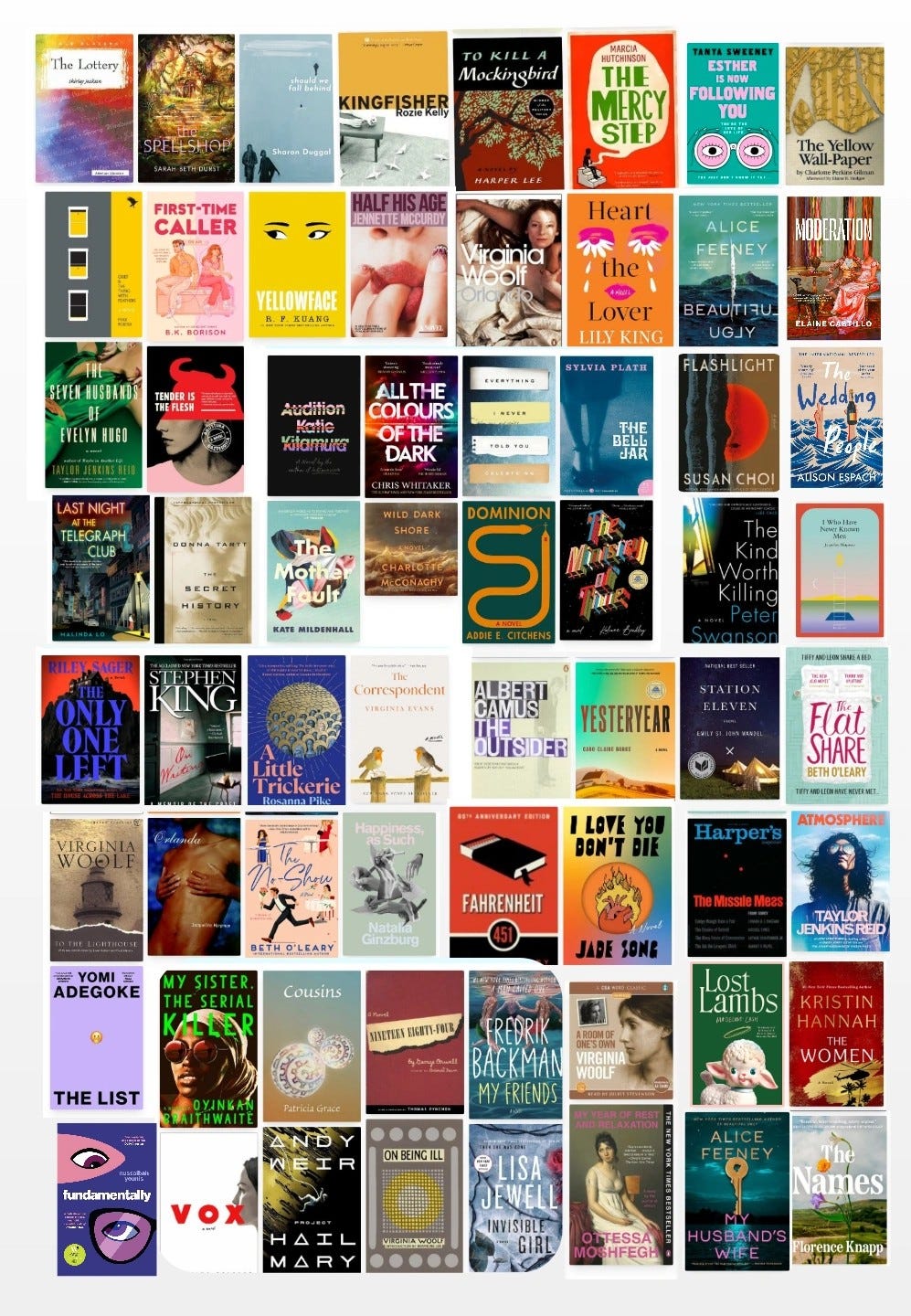
Later in this article I’ll be sharing:
I set myself a target at the start of the year to read 100 books in 2026, as it's the National Year of Reading. I’ve really fallen in love with reading again since starting to write my book. When I was studying, I found I read for pleasure less because I was being made to do so much academic reading in my spare time. It felt like my brain couldn’t absorb any more words in the moments in between essays and assignments.
Then I finished my Masters and I started working again full time, and, sure, I read here and there, but nothing like I do now. The temptation of the doomscroll would loom heavy, and after a stressful day sometimes I needed the swiping thumb action to just lull my brain in to switch off mode. Now I can escape into stories again.
I occasionally get melancholic about all the books I could have read by now if I’d always had the reading habits I now possess. But mostly I'm just glad I found my way back to reading.
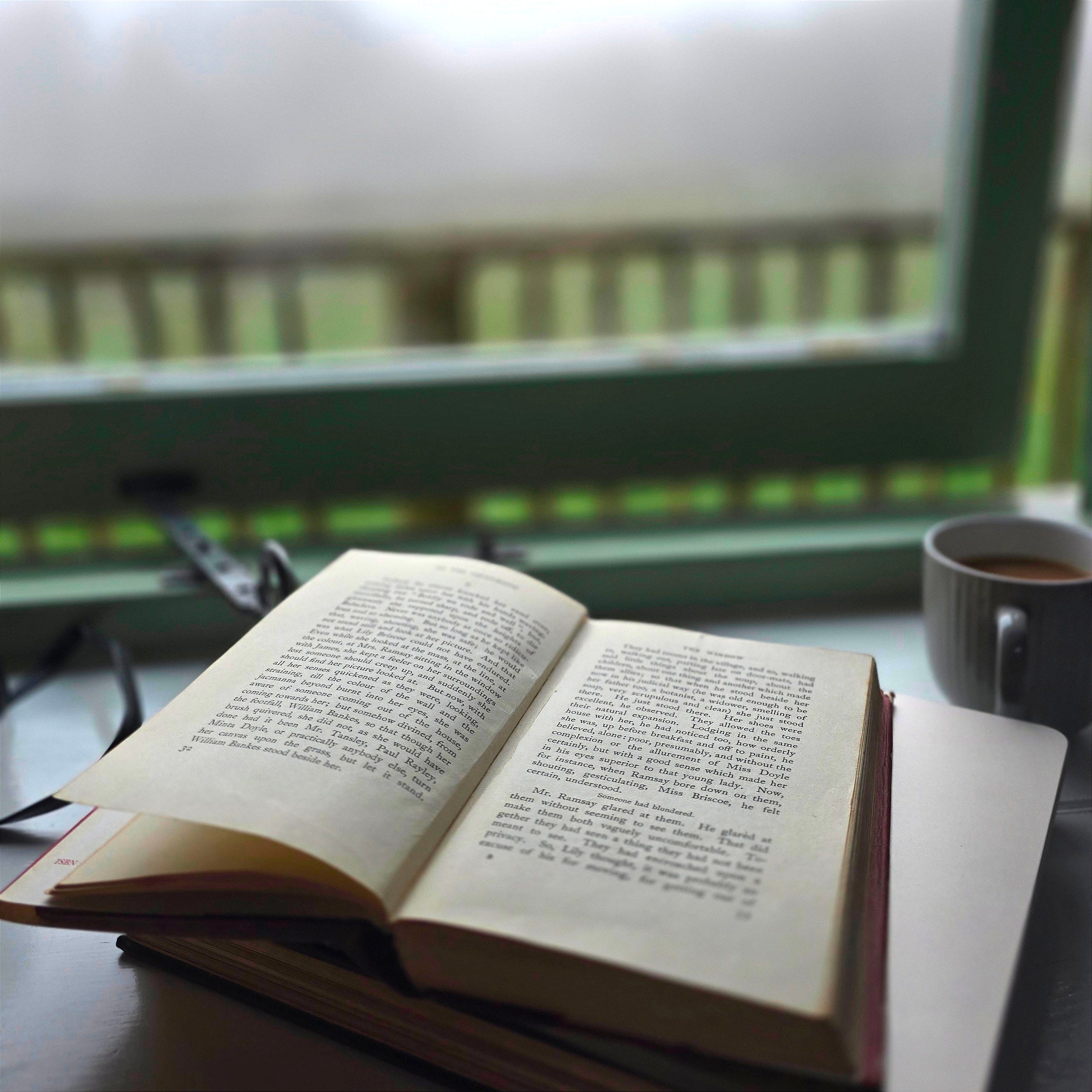
Nowadays I always have three books on the go: one audiobook, one on Kindle and one in print. I know many writers say they can’t read other fiction when they are writing, but I find it helps me immensely. I’m not saying I steal ideas from other people’s books or anything, but there might just be a simple scene in a book that makes me think ‘Huh.. I don’t think I have a restaurant scene in my book. I could have this bit of dialogue happen over dinner’.
I definitely read books with a slightly different lens now, one that I can’t seem to turn off. I’m looking at first lines, chapter transitions, chapter length, dialogue tags; the mechanics behind the story. But rather than diminishing the experience, I really feel like it enhances it. Reading as a writer adds another layer; it makes me think more carefully about every word.
Reading this year has opened my eyes to so many new things: I have learnt about different cultures, I’ve become momentarily hyper-focussed on a particular moment in history, I’ve read novels, short stories, creative non-fiction, I’ve discovered the Women’s Prize, I’ve joined a book club! I’ve dabbled in my first experiences of fantasy and ‘smut’, one of which I enjoyed much more than the other – I’ll leave you guessing as to which…
Reading this much hasn’t made me smarter, but it has made me more curious. I spend less time scrolling and more time thinking. My attention span feels stronger. I’m more observant as a writer and more empathetic as a reader. I’ve also become the sort of person who can somehow weave a book recommendation into almost any conversation. The books themselves matter, but so does the habit of making space for them.
Enough chat - let’s dive into a few of these books:
A book that exceeded my expectations:
The Women by Kristin Hannah
This was an interesting one because, based on the reviews, my expectations probably should have been high from the start. But I had never really ventured into historical fiction before and, if I’m honest, the genre alone made me hesitant. The only reason I picked it up was because it was our book club read.
I was completely blown away.
After finishing it, I spent the best part of a month hyper-fixated on the Vietnam War, reading articles and falling down internet rabbit holes. I even found myself irrationally annoyed while watching Platoon because there wasn’t a single woman in sight. That probably tells you everything you need to know about how deeply this book got under my skin.
It was harrowing, intimate, insightful and informative all at once. The writing was so vivid that entire scenes played out like a film in my head. I’ve recommended it to countless people since reading it, which is probably the highest compliment I can give a book.
“The women had a story to tell, even if the world wasn’t quite yet ready to hear it, and their story began with three simple words. We were there.”
- Kristin Hannah, The Women
A book that met my expectations:
All The Colours of the Dark by Chris Whitaker
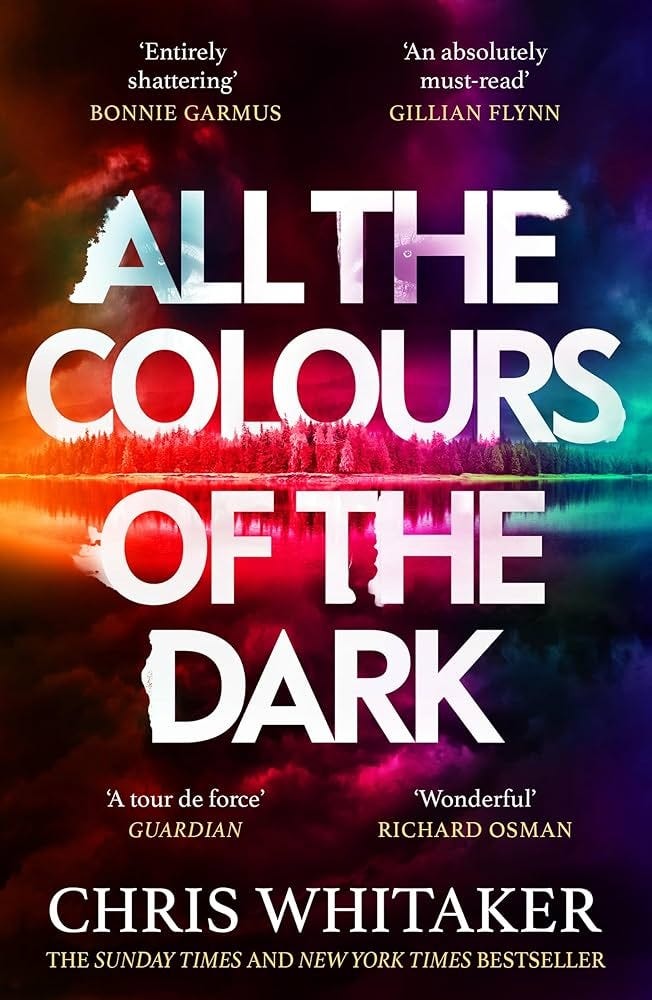
Sometimes you pick up a book and know almost immediately that it’s going to be for you. That was my experience with this one.
By the end, I felt as though I knew every character personally. I watched them grow, make mistakes, experience joy and endure unimaginable trauma. The short chapters created a momentum that made it feel impossible to put down. I seemed to race through hundreds of pages without noticing.
Perhaps what impressed me most was learning that Chris Whitaker has never visited many of the places he writes about. There is such confidence in his depiction of setting that I never once questioned it. The world felt completely real to me, which made discovering that afterwards all the more remarkable.
It’s rare for a book to be both sweeping in scope and deeply intimate, but this managed it.
An author I discovered:
Virginia Woolf
Please don’t judge me too harshly for only just properly discovering Virginia Woolf.
I read A Room of One’s Own during a solo writing retreat and it genuinely felt like a lightbulb switched on in my brain. I was struck by how eloquent she was and how relevant many of her observations still feel, despite writing over a century ago.
Since then I’ve read To the Lighthouse, Orlando and On Being Ill, and I’ve accumulated copies of her diaries and letters that I now dip into from time to time. I completely understand why she isn’t for everyone, but I find her stream-of-consciousness style fascinating. Reading Woolf often feels less like reading a story and more like being allowed access to somebody’s thoughts, and that is so appealing to me.
“So long as you write what you wish to write, that is all that matters; and whether it matters for ages or only for hours, nobody can say.”
- Virginia Woolf, A Room of One’s Own
A unique style of writing:
Lost Lambs by Madeline Cash
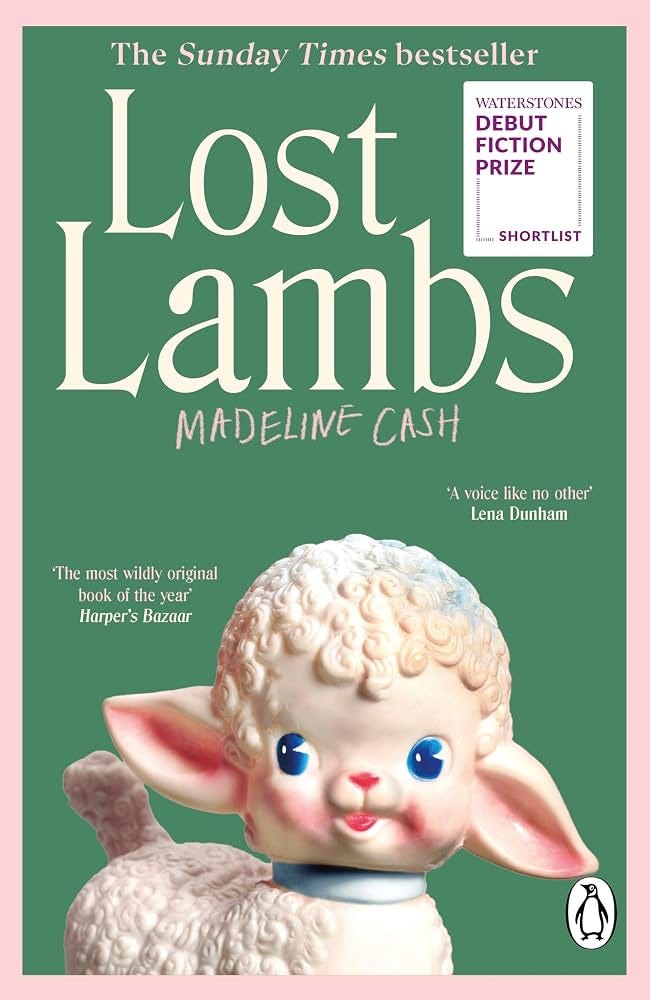
One of my favourite reading experiences this year came from a tiny detail.
In the novel there is an infestation of gnats in a church. As the story progresses, words containing “na” are interrupted by an extra “g”, as though the gnats themselves are buzzing into the text.
It sounds strange, but it worked brilliantly. Every time it happened, it interrupted the rhythm of my reading for a split second. I became aware of the gnats in exactly the same way the characters would have been aware of them: constantly present, mildly irritating and impossible to ignore.
It was such a clever piece of craftsmanship. I spent most of the time I was reading the book telling anyone who would listen about “the gnat thing”.
A beautiful book:
My Friends by Fredrik Backman
Some books leave you thinking about their plot. Some leave you thinking about a particular character. My Friends left me thinking about people in general.
The author has a remarkable ability to write characters who feel completely real, full of contradictions and flaws, yet impossible not to care about. There is so much warmth in his writing, even when he is exploring grief, loneliness or regret.
It’s difficult to explain exactly why I found this book so beautiful. It simply made me feel more compassionate towards other people by the time I reached the final page.
“Fragile hearts break in palaces and in dark alleys alike.”
―-Fredrik Backman, My Friends
A book that made me slow down:
Should We Fall Behind by Sharon Duggal
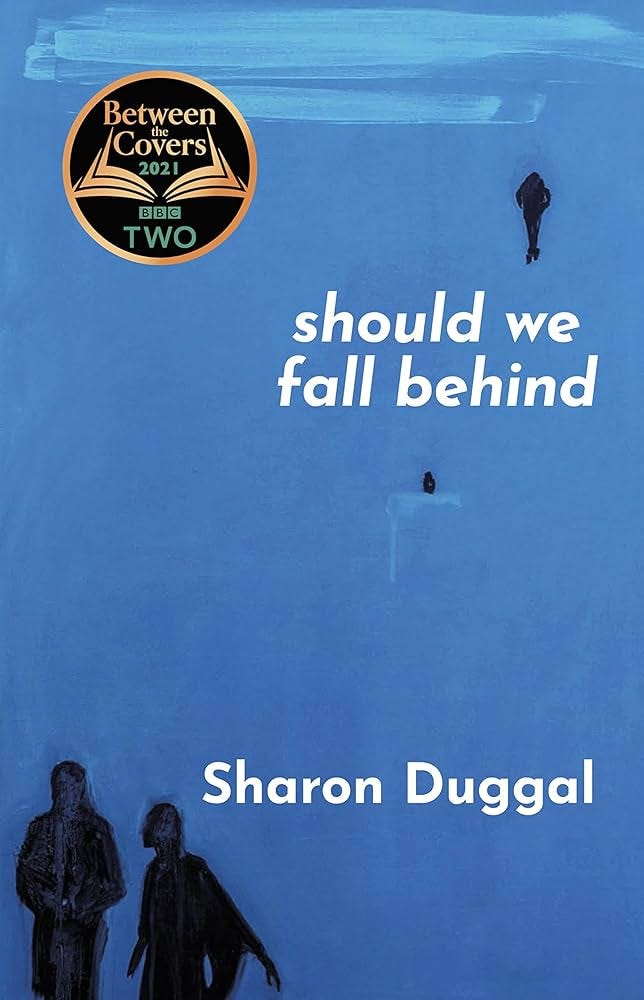
I read this ahead of an Arvon retreat where the author would be running workshops, and I’m very glad I did.
I hesitate to describe the book as relaxing because that can sound like a backhanded compliment. It isn’t a book driven by dramatic twists or relentless plot. Instead, it focuses on the interconnected lives of people living on the same street.
I loved how invested I became in each character, each with their own unique voice that came across so clearly. I feel like it changed the way I look at people I pass in everyday life. It made me think more carefully about homelessness, not as a distant social issue, but as individual lives that could so easily sit alongside any of ours. The book doesn’t dramatise people’s lives, it trusts that ordinary lives are interesting enough on their own, and I think that’s a confidence many novels lack.
A character I wasn't ready to leave behind
The Mercy Step
One of the things I thought was so clever about The Mercy Step was the way the narrator’s relationship with her own trauma evolves over time. The events themselves don’t change, but her interpretation of them does. As she ages, gains perspective and accumulates new experiences, she revisits parts of her past with a different understanding. Mercy is a fascinating, complex and deeply lovable character, and by the end of the novel I felt genuinely invested in her life.
It felt incredibly honest. We often talk about trauma as though it is a fixed thing, but I feel this book proves how our attitudes towards our experiences can shift throughout our lives. I found myself thinking a lot about my own memories and self-understanding as I read it.
Knowing that the novel draws on elements of Marcia Hutchinson’s own life added another layer to the reading experience. It felt especially meaningful to hear her read from it at the Women’s Prize Live event in 2026. There was something quite special about hearing those words in the author’s own voice after spending so much time immersed in the story.
“Life can get very lonely without friends, best or otherwise.”
- Marcia Hutchinson, The Mercy Step
Recommendations
For anyone looking for recommendations, other books I have rated highly this year are:
The Seven Husbands of Evelyn Hugo – Taylor Jenkins Reid
To Kill a Mockingbird – Harper Lee
My Sister, the Serial Killer – Oyinkan Braithwaite
The Correspondent – Virginia Evans
The Names – Florence Knapp
The Wedding People – Alison Espach
Wild Dark Shore – Charlotte McConaghy
Flashlight – Susan Choi
Yesteryear – caro claire burke
The Secret History – Donna Tartt
Yellowface - Rebecca F. Kuang
The Mother Fault - Kate Mildenhall
Fundamentally – Nussaibah Younis
Dominion - Addie E. Citchens
If you’d told me six months ago that I’d read 64 books by midsummer, I wouldn’t have believed you. More surprising than the number itself is how much reading has reshaped the way I think, write and pay attention. Every great book seems to leave a tiny mark behind.
There are hundreds more sitting on my shelves waiting for their turn, and I already know some of them will likely become favourites.
For now, though, I’d love to know: what are you looking forward to reading next?
I am seeing we have very similar tastes in books! I am going to have to take some of your recs I haven’t read yet under advisement!!
We have such similar taste in books. I've read almost everything you recommended! My favorites are The Secret History and The Wedding People.
When I was working on my master's degree, I barely read for pleasure either. Like you, I'm so glad I found my way back to reading, and I almost always have several books going in different formats.
I also have a habit of going down rabbit holes when a book sparks my curiosity. I'm currently reading The Windsor Affair, a historical fiction novel about the British royal family in the 1930s. It sent me back to the film The King's Speech, and I've been researching more about that period ever since.